



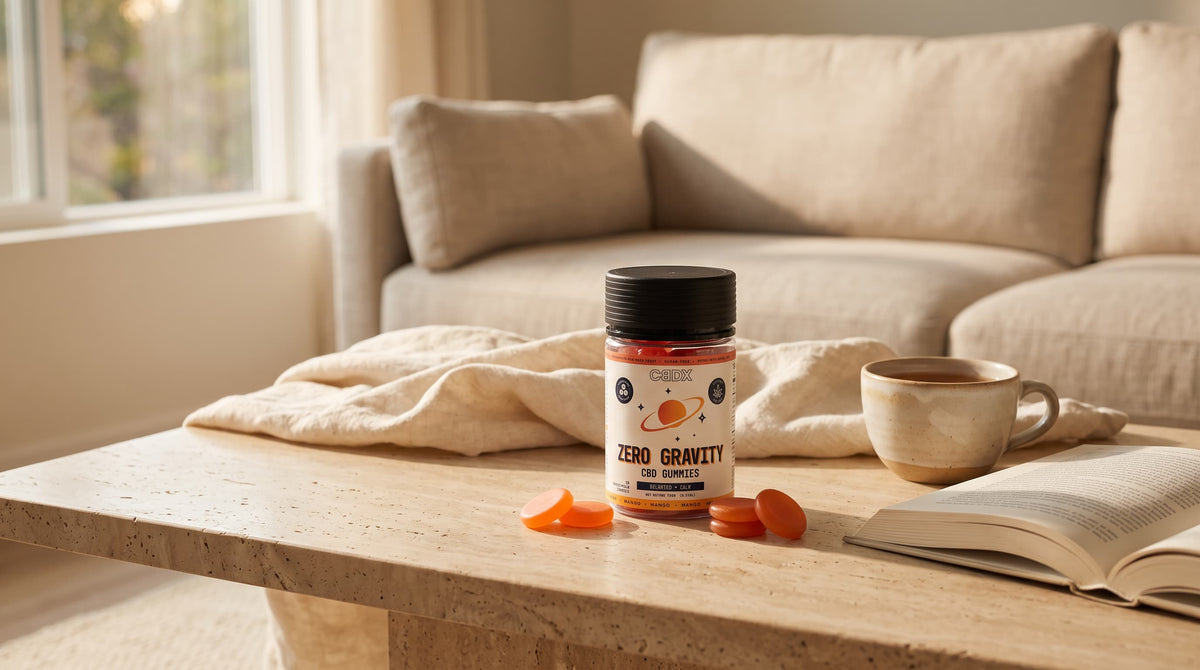
For years, THC gummies have been a favorite way for adults to unwind and enjoy some downtime. But as hemp regulations change, more people are discovering another side of the cannabinoid world: CBD gummies.
If you've always chosen THC, you might wonder: Are CBD gummies worth trying if they don't get you high? Absolutely worth learning about. CBD isn't a weaker version of THC. It's a different cannabinoid with its own appeal, particularly for people interested in a wellness routine without intoxication.
Here's how CBD and THC compare, what researchers are learning, and why a THC-free gummy could be a surprisingly good fit.
CBD Gummies vs. THC Gummies: What's the Difference?
CBD (cannabidiol) and THC (tetrahydrocannabinol) are naturally occurring cannabinoids from cannabis and hemp. The most noticeable distinction is simple: THC produces a high; CBD itself does not.
THC can create euphoria and altered perception. CBD offers a non-intoxicating experience, which can be appealing when you want to keep a clear head. Both cannabinoids are being studied for their effects on the body, but their benefits and tradeoffs aren't interchangeable.
For a science-based overview, see the NIH guide to cannabis and cannabinoids.
CBD vs. THC Gummies at a Glance
| What matters to you | CBD gummies | THC gummies |
|---|---|---|
| Overall experience | Non-intoxicating cannabinoid experience | Intoxicating experience with a noticeable high |
| Keeping a clear head | No characteristic THC high | Can affect attention, perception, and coordination |
| Stress and anxiety research | Promising research on supressing anxiety | Some find it relaxing; others experience increased anxiety |
| Pain and comfort research | An active area of research, including pain-related pathways | Some THC-containing treatments have evidence of modest pain benefits |
| Daily routine | An option for adults who prefer to avoid intoxication | Better suited to times when intoxication is acceptable |
Why People Are Taking a Second Look at CBD Gummies
Many people first discovered cannabinoids through THC because its effects are easy to notice. But a noticeable high isn't the only reason to explore hemp-derived products.
CBD's biggest appeal is that it lets you explore a cannabinoid-based routine without the characteristic THC high. That can be especially attractive if you've ever found THC too intense, unpredictable, or simply inconvenient for your plans.
CBD and Anxiety: An Encouraging Area of Research
One of the most talked-about areas of CBD research is anxiety. Human studies have reported encouraging results in certain situations, including experimentally induced anxiety.
For former THC gummy users, there's another meaningful difference: THC can sometimes make people feel uneasy or overly stimulated, especially at higher doses. CBD doesn't produce that same intoxicating high.
If you've enjoyed cannabinoids but haven't always enjoyed THC's intensity, CBD may be an interesting alternative to explore. While the research is very promising, CBD gummies aren't an established treatment for anxiety disorders, and results vary from person to person.
Learn more about the evolving science in the NIH cannabinoid research overview.
CBD and Pain: Why Researchers Are Interested
CBD is also attracting interest in research involving pain signaling and inflammation. Scientists are studying how it interacts with biological pathways that may be relevant to physical discomfort.
That's exciting territory, but it's important to distinguish early findings from established results. Human studies have not yet shown that CBD gummies consistently relieve chronic pain, and CBD shouldn't replace medical care or proven pain treatments, but for many people they've shown great promise in suppresion of pain and soreness.
Still, for someone who wants to explore non-intoxicating cannabinoids, CBD offers a different experience from THC and an active area of scientific investigation.
Five Reasons CBD Gummies May Be a Better Fit for Your Routine
1. You Can Enjoy a Cannabinoid Routine Without Getting High
Maybe you love the idea of a gummy but don't want your plans shaped around an intoxicating experience. CBD gives you a way to keep the ritual while choosing a non-intoxicating cannabinoid.
2. You Can Skip the THC High You Don't Always Want
THC can feel different depending on dose, setting, and individual sensitivity. CBD doesn't create that characteristic high, which may appeal to people who find THC too intense or unpredictable.
3. It's a Different Way to Explore Hemp Wellness
CBD has its own research profile, particularly in areas such as anxiety. It's worth exploring on its own terms rather than judging it by whether it feels like THC.
4. You Can Keep the Familiar Gummy Ritual
If taking a gummy has become part of your evening routine, you don't necessarily need to abandon that habit just because you're exploring THC-free options. A CBD gummy offers a different kind of experience, without promising the same effects.
5. You May Find That Less Intoxication Is More Your Style
Some people discover that what they value most is having a simple, consistent routine, not necessarily feeling high. For them, CBD's non-intoxicating nature may be the feature that matters most.
Is CBD Weaker Than THC?
Not exactly. THC is more noticeable because it produces intoxication. CBD doesn't create the same high, but that doesn't make it a diluted version of THC. They're different cannabinoids with different properties.
If you're looking to recreate the THC high, CBD isn't a direct replacement. But if you're looking for a cannabinoid experience without that high, CBD may be more aligned with your preferences.
Switching From THC Gummies to CBD Gummies: What to Expect
If you've used THC gummies for years, the biggest adjustment may be your expectations. With CBD, you won't get the familiar THC high. You may notice subtle effects, or you may not notice an obvious sensation at all.
Instead of asking, "Does this feel like my old THC gummy?" try asking, "Do I enjoy this different kind of routine?"
If you've been using THC regularly and decide to stop, changes in sleep, appetite, or mood can occur. CBD gummies haven't been established as a treatment for cannabis withdrawal, but many have reported that it can help ease many of the symptoms.
If relaxation is your priority, our guide to THC-free gummies for relaxation explores other non-intoxicating cannabinoid options.
Explore Zero Gravity CBD Gummies From CBDX
Curious about trying CBD on its own? Zero Gravity Sugar-Free CBD Gummies offer a straightforward CBD-focused option for adults interested in a non-intoxicating cannabinoid routine.
Zero Gravity is also available in a classic cane sugar version, so you can choose the gummy style you prefer.
Explore Zero Gravity CBD Gummies →
There's More to THC-Free Gummies Than CBD
CBD is just one part of the hemp cannabinoid story. CBG, CBN, and CBC are also being studied, and different formulas appeal to different preferences.
Interested in learning more? Read our CBG vs. CBD comparison, or explore our guide to THC-free relaxation gummies.
How to Choose Quality CBD Gummies
Look for Clear CBD Amounts
A good product label tells you the amount of CBD in each gummy, so you know what you're choosing.
Choose Independently Tested Products
Third-party lab reports help you make an informed decision by showing cannabinoid content and screening for contaminants. For products described as THC-free, look at the actual THC test results and detection limits rather than relying on the label alone.
Find an Ingredient List That Fits You
From sugar-free formulas to classic cane sugar gummies, choosing a product that matches your preferences can make the experience more enjoyable.
Keep Expectations Grounded
CBD has an interesting and growing research base, but individual experiences vary. Look for transparent brands that explain the science without promising cures.
Frequently Asked Questions
Do CBD gummies get you high?
CBD itself is non-intoxicating, so it doesn't produce the characteristic THC high. Check third-party testing results because some hemp products may contain THC.
Can CBD gummies help with anxiety?
Early human research on CBD and anxiety has shown some encouraging findings, although studies are limited and CBD gummies aren't an established anxiety treatment. People interested in CBD should discuss medical concerns with a healthcare professional.
Are CBD gummies good for pain?
Researchers are studying CBD's relationship with pain-related biological pathways. Clinical evidence hasn't established CBD gummies as a reliable chronic-pain treatment, so they shouldn't replace medical care, but the early findings have been very promising.
Are CBD gummies better than THC gummies?
They may be a better fit if you want to avoid intoxication or don't enjoy THC's stronger effects. The best fit depends on your preferences and what you're hoping to experience.
Can I switch from THC gummies to CBD gummies?
You can explore CBD as a different cannabinoid option, but don't expect it to reproduce THC's high or act as a proven treatment for withdrawal symptoms.
Will CBD gummies show up on a drug test?
Most standard drug tests look for THC metabolites, not CBD. Still, trace or unexpected THC exposure can create a positive-test risk. Review independent lab results, and don't assume any cannabinoid product is guaranteed drug-test safe.
Can I take CBD gummies every day?
CBD can cause side effects and interact with medications. Talk with a healthcare professional before regular use, especially if you take prescriptions or have a health condition.
The Bottom Line: CBD Deserves a Fresh Look
If THC gummies introduced you to the world of cannabinoids, CBD may be your next discovery.
CBD isn't a consolation prize for THC. It's a different experience with its own appeal. You can explore a cannabinoid-based routine without the familiar high, and you may discover that a non-intoxicating option fits your preferences better than you expected.
There's still plenty to learn about CBD's potential health applications, but one thing is clear: not getting high can be a feature, not a drawback.
Explore CBDX THC-Free Gummies →
Sources and Further Reading
- NIH / NCCIH: Cannabis and Cannabinoids: What You Need To Know
- FDA: What You Need to Know About Products Containing Cannabis or Cannabis-Derived Compounds, Including CBD
Disclaimer: This article is for educational purposes only and is not medical advice. CBDX products are not intended to diagnose, treat, cure, or prevent any disease. CBD may cause side effects and interact with medications. Consult a healthcare professional before use, particularly if pregnant, breastfeeding, or taking medications. Availability and legality vary by jurisdiction.


