



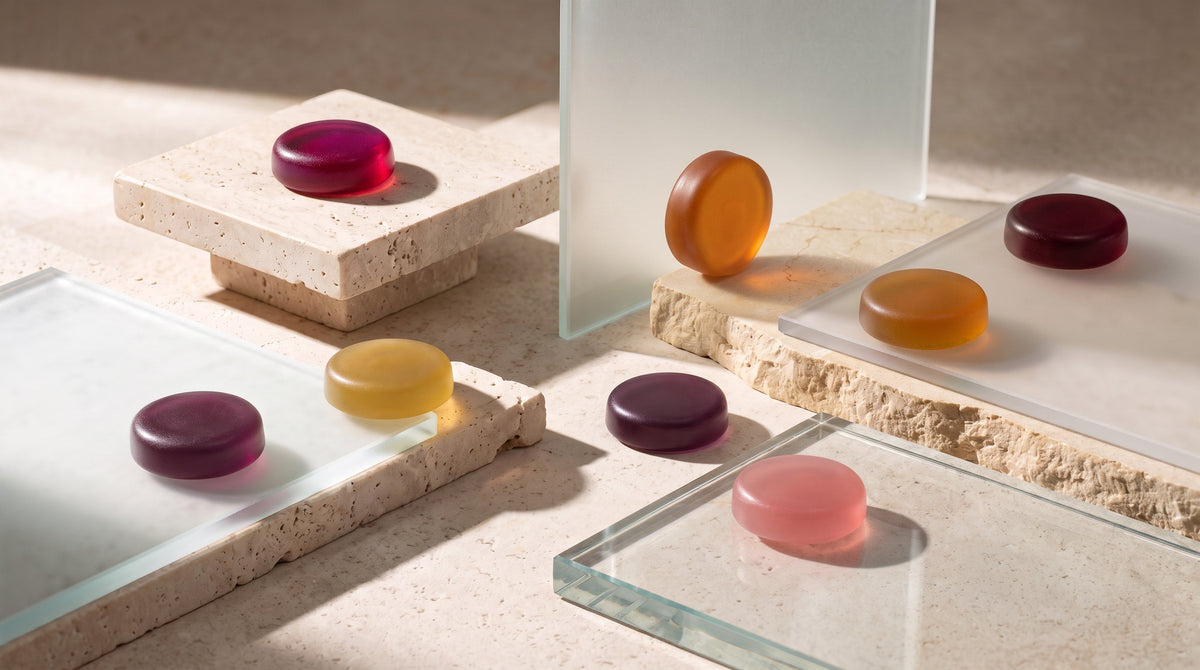
Pick up two THC gummies and they may look almost identical.
Turn them over, though, and one ingredient often separates a vegan gummy from a traditional one:
Gelatin.
Vegan THC gummies are made without animal-derived ingredients and commonly use plant-based alternatives such as pectin to create their texture.
But “vegan” only answers one question.
It doesn’t automatically tell you whether the gummy is sugar-free, naturally sweetened, thoughtfully formulated, or made with ingredients you personally want to consume.
That’s why the ingredient list still matters.
Key Takeaways
-
Traditional gummies commonly use gelatin, which is derived from animal collagen.
-
Vegan THC gummies typically use plant-based gelling agents such as pectin instead.
-
Pectin and gelatin create different textures and behave differently in a gummy formulation.
-
Vegan does not automatically mean sugar-free, low-calorie, natural, or minimally processed.
-
Sweeteners, colors, oils, flavorings, cannabinoid potency, and lab testing still matter.
-
CBDX uses pectin rather than gelatin and intentionally avoids refined seed oils, artificial dyes, and unnecessary additives.
-
CBDX offers both traditional cane-sugar gummies and sugar-free versions sweetened with monk fruit.
What Makes a THC Gummy Vegan?
A vegan THC gummy is made without animal-derived ingredients.
The most common ingredient that makes a traditional gummy non-vegan is gelatin.
Gelatin is a protein made from collagen, typically sourced from animal skin, connective tissue, and bones.
It creates the stretchy, elastic texture most people associate with classic gummy candy.
Vegan gummies need another way to create that structure.
One of the most common alternatives is pectin.
Pectin vs. Gelatin: What’s the Difference?
Pectin and gelatin can both turn a liquid mixture into a gummy.
But they don’t create exactly the same result.
| Pectin | Gelatin | |
|---|---|---|
| Source | Plant-derived | Animal-derived collagen |
| Vegan | Yes | No |
| Typical texture | Cleaner, shorter bite | Stretchier, more elastic chew |
| Common sources | Citrus fruits, apples and other plants | Animal collagen |
| Common uses | Gummies, jams, jellies | Gummies, marshmallows, desserts |
The biggest difference most consumers notice is texture.
Gelatin tends to stretch.
Pectin tends to break more cleanly when you bite into it.
Neither texture is inherently better.
It comes down to preference and how well the gummy is formulated.
What Is Pectin?
Pectin is a naturally occurring carbohydrate found in the cell walls of plants.
It is especially associated with fruits such as apples and citrus.
Food makers have used pectin for generations in products such as jams, preserves, jellies, and candy because it can create a stable gel.
For THC gummies, pectin offers a practical advantage:
You can make a true gummy without using animal-derived gelatin.
But pectin alone doesn’t determine whether a gummy tastes good.
The final texture also depends on things such as:
-
Acidity
-
Moisture
-
Sweetener
-
Fruit flavor
-
Cooking process
-
Formula balance
A great pectin gummy still has to be formulated well.
Do Pectin Gummies Feel Different?
Usually.
If you grew up eating traditional gummy bears, you're probably familiar with gelatin's springy, almost rubbery chew.
Pectin generally creates a softer or cleaner bite.
Some people prefer that immediately.
Others prefer the classic bounce of gelatin.
This is one of those cases where there is no universal winner.
The better gummy is the one whose texture you actually enjoy.
Are Pectin Gummies Better in Warm Weather?
Pectin and gelatin respond differently to temperature, but the finished product matters more than the ingredient name alone.
Gelatin gels are particularly sensitive to heat.
Pectin-based gummies can behave differently and are often useful when formulators want a firmer plant-based gummy.
But moisture, acids, packaging, storage conditions, and the rest of the formulation still play major roles.
So pectin should not be treated as a magic ingredient that makes a gummy indestructible.
Keep your gummies somewhere reasonably cool and dry regardless of which gelling agent they use.
Does Vegan Automatically Mean Healthy?
No.
This is probably the most useful thing to understand about vegan THC gummies.
A product can be 100% vegan and still contain:
-
Large amounts of added sugar
-
Artificial sweeteners
-
Artificial colors
-
Highly processed flavorings
-
Refined oils
-
Preservatives
-
Ingredients you personally prefer to avoid
“Vegan” describes the absence of animal-derived ingredients.
It does not describe the entire nutritional or ingredient profile.
The same principle applies to plenty of ordinary foods.
Something can fit perfectly into a vegan diet without automatically becoming a wellness product.
THC gummies are no different.
What Should a Thoughtfully Formulated Vegan Gummy Look Like?
Once you've confirmed that a gummy is vegan, keep reading.
A thoughtful formulation should make it easy to understand what you're consuming.
Look for:
-
A plant-based gelling agent such as pectin
-
Clearly stated THC potency
-
A complete ingredient list
-
Straightforward sweeteners
-
Clearly identified flavors and colors
-
Third-party cannabinoid testing
-
Ingredients that align with your personal preferences
At CBDX, our own ingredient philosophy goes a little further.
We intentionally avoid refined seed oils, artificial dyes, and unnecessary additives in our gummies.
That is a formulation choice we make because we prefer simpler, more intentional ingredient profiles.
Vegan and Sugar-Free Are Not the Same Thing
This is another common source of confusion.
A vegan gummy can contain cane sugar.
A sugar-free gummy can also be vegan.
They are completely separate characteristics.
For example:
A Vegan Cane-Sugar Gummy Might Use
-
Pectin
-
Tapioca syrup
-
Organic cane sugar
-
Fruit flavoring
-
Citric acid
A Vegan Sugar-Free Gummy Might Use
-
Pectin
-
Tapioca-based ingredients
-
Monk fruit
-
Fruit flavoring
-
Citric acid
Other brands may use stevia, sugar alcohols, sucralose, or different combinations.
So if you're specifically trying to reduce added sugar, don't stop at the vegan label.
Look for sugar-free, then check what sweetener was actually used.
CBDX uses monk fruit in its sugar-free gummy lineup.
What About Refined Seed Oils?
Vegan does not mean seed-oil-free.
Some gummy formulations use small amounts of oils as processing ingredients, coatings, or parts of the overall formula.
CBDX chooses not to use refined seed oils in our gummies.
For us, it is part of a broader ingredient philosophy:
keep the formula intentional and avoid ingredients we don't believe are necessary to make a great gummy.
If avoiding certain oils matters to you too, check the complete ingredient list rather than assuming a vegan product automatically fits that preference.
Are Vegan Gummies Easier to Digest?
Not automatically.
Digestive comfort depends on much more than whether a gummy uses pectin or gelatin.
Other ingredients can play a larger role, particularly:
-
Sugar alcohols
-
Sweeteners
-
Acids
-
Serving size
-
Individual sensitivities
For example, someone who is sensitive to certain sugar alcohols may find a pectin-based sugar-free gummy uncomfortable even though the gummy is completely vegan.
That's why looking at the whole formulation matters more than focusing on a single ingredient.
Are Vegan Gummies Halal or Kosher?
Not necessarily.
Vegan, halal, and kosher are different standards.
A vegan gummy eliminates animal-derived gelatin, which may make the formulation compatible with more dietary preferences.
But halal or kosher status can depend on additional factors including:
-
Ingredient sourcing
-
Processing aids
-
Manufacturing equipment
-
Facility practices
-
Formal certification
If one of those certifications is important to you, look for the appropriate verification rather than assuming vegan automatically means the same thing.
What About Ethical Reasons for Choosing Vegan Gummies?
For some people, the decision is very simple.
They don't want animal-derived ingredients.
That's reason enough to choose a vegan gummy.
You don't need to turn that preference into a health claim.
A vegan THC gummy allows someone following a plant-based lifestyle to enjoy an edible without compromising that dietary or ethical choice.
That's one of the biggest reasons the category has grown.
What Else Should You Check Before Buying Vegan THC Gummies?
Once you get past the vegan label, these questions matter much more.
How Much THC Is in Each Gummy?
The gelling agent tells you nothing about potency.
Look for the number of milligrams of THC per gummy or serving.
Is the Product Third-Party Tested?
A current Certificate of Analysis, or COA, should help confirm the cannabinoid profile and potency of the tested batch.
What Sweetener Does It Use?
Cane sugar?
Monk fruit?
Stevia?
Sugar alcohols?
Artificial sweeteners?
This can significantly change both the ingredient profile and the experience of eating the gummy.
Are Artificial Colors or Dyes Used?
If avoiding artificial dyes matters to you, check the ingredient list.
The vegan label alone won't tell you.
Are Refined Seed Oils Used?
Again, this is separate from vegan status.
If you avoid them, look specifically.
What Other Cannabinoids Are Included?
Not every THC gummy is just THC.
Some combine Delta-9 with:
-
CBD
-
CBG
-
CBN
-
Other cannabinoids
Those differences may influence which formulation you choose much more than the fact that it uses pectin.
Do Vegan THC Gummies Feel Different?
The vegan part shouldn't determine the THC effect.
If two gummies contain the same amount of Delta-9 THC, using pectin instead of gelatin does not inherently make one more intoxicating.
What can matter much more is:
-
THC dose
-
Other cannabinoids
-
Individual sensitivity
-
Food intake
-
Previous THC experience
So choose pectin because you prefer a plant-based gummy.
Choose your THC dose based on the experience you're looking for.
They are separate decisions.
Why CBDX Uses Pectin
CBDX gummies are formulated with pectin rather than gelatin.
That gives us a plant-based gummy while creating the type of texture we want from the finished product.
But pectin is only one part of the formula.
We also pay close attention to:
-
Flavor
-
Texture
-
Sweetener
-
Cannabinoid combinations
-
Potency
-
Ingredient simplicity
CBDX works with trusted manufacturing partners to produce gummies according to our formulation, ingredient, flavor, and potency specifications.
Each production batch is supported by third-party laboratory testing, with Certificates of Analysis available for transparency.
CBDX Cane Sugar vs. Sugar-Free Vegan Gummies
One advantage of the CBDX lineup is that choosing vegan does not force you into one sweetening system.
Our gummies use pectin across both formats.
Classic Gummies
Our traditional gummies use organic cane sugar for a more classic candy-style experience.
Sugar-Free Gummies
Our sugar-free gummies use monk fruit instead of added cane sugar.
That means the bigger choice isn't really:
Vegan or regular.
With CBDX, the gummies are already pectin-based.
The more useful questions become:
-
Which cannabinoid combination do you want?
-
How much THC do you want?
-
Cane sugar or monk fruit?
-
Daytime, balanced, relaxing, or nighttime formulation?
Those decisions actually change your experience.
Vegan vs. Regular THC Gummies: Which Is Better?
If you follow a vegan diet, choosing a vegan gummy is easy.
If you don't, it mostly comes down to ingredients and preference.
You may prefer the cleaner bite of pectin.
Someone else may prefer the stretchy chew of gelatin.
But neither ingredient tells you:
-
Whether the THC is accurately dosed
-
Whether the gummy has been tested
-
Whether it contains added sugar
-
Whether it uses artificial dyes
-
Whether it uses refined seed oils
-
Whether the cannabinoid combination fits what you want
That's why the vegan claim should be the beginning of the ingredient conversation, not the end.
Frequently Asked Questions About Vegan THC Gummies
What makes THC gummies vegan?
Vegan THC gummies contain no animal-derived ingredients. They commonly replace gelatin with plant-based gelling agents such as pectin.
Is pectin vegan?
Yes. Pectin is plant-derived and commonly sourced from fruits such as citrus and apples.
Is gelatin vegan?
No. Gelatin is made from animal-derived collagen.
Are vegan THC gummies healthier?
Not automatically. Vegan tells you the product contains no animal-derived ingredients. Sugar, sweeteners, colors, oils, additives, potency, and the overall formulation still need to be considered separately.
Are all pectin gummies sugar-free?
No. Pectin is simply the gelling agent. Pectin gummies can be made with cane sugar, monk fruit, or many other sweetening systems.
Are CBDX gummies made with gelatin?
No. CBDX gummies use pectin rather than gelatin.
Does CBDX use refined seed oils?
CBDX gummies are formulated without refined seed oils as part of our ingredient philosophy.
Does CBDX offer sugar-free vegan gummies?
Yes. CBDX offers pectin-based sugar-free gummies sweetened with monk fruit, along with traditional cane-sugar options.
Do vegan THC gummies feel different from regular gummies?
The texture can feel different because pectin and gelatin create different types of gummies. The THC experience depends much more on THC dose, cannabinoid formulation, and individual response.
Are vegan THC gummies automatically natural?
No. A vegan gummy can still contain artificial colors, artificial sweeteners, preservatives, and other highly processed ingredients. Read the complete ingredient list.
The Bottom Line
“Vegan” is useful information.
But it's only one piece of the label.
It tells you the gummy was made without animal-derived ingredients.
It doesn't tell you how much THC is inside.
It doesn't tell you what sweetens it.
It doesn't tell you whether it contains artificial dyes, refined oils, or unnecessary additives.
And it doesn't tell you whether the product has been properly tested.
So check whether it's vegan.
Then keep reading.
The best gummy isn't the one with the most claims on the front. It's the one where you feel good about what's actually inside.
Last reviewed and updated: August 2026


