



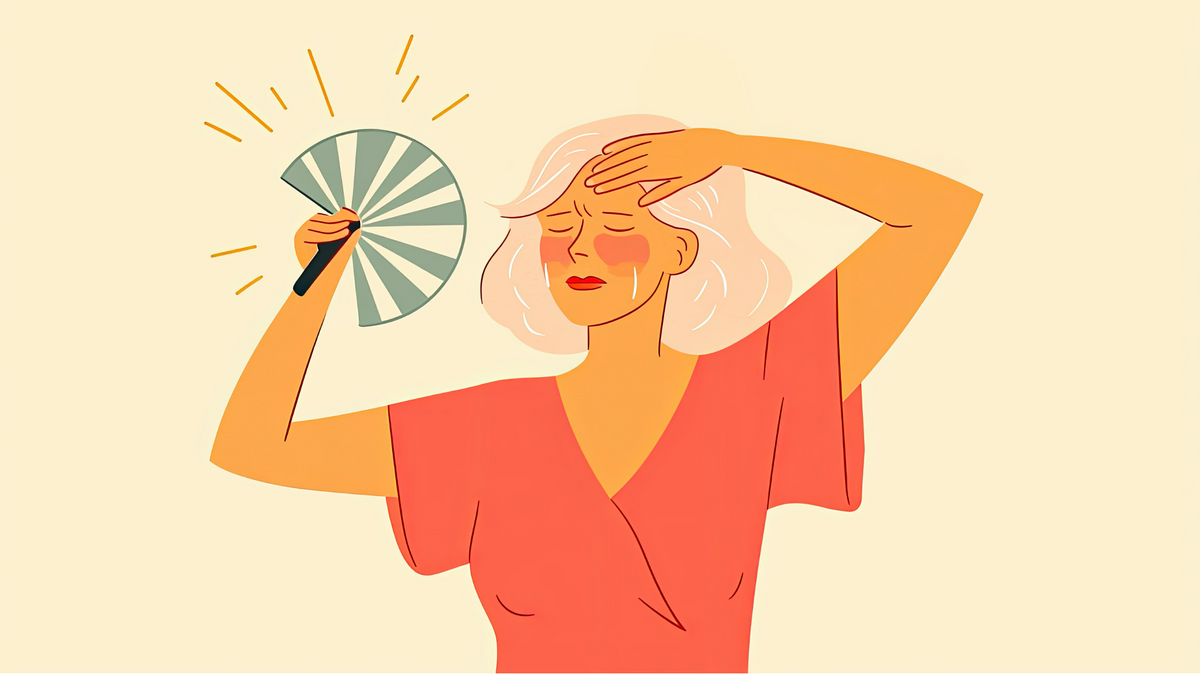
Hot flashes get most of the attention.
But menopause can show up at 2 a.m. when you can't get back to sleep.
It can feel like your emotional volume has suddenly been turned up, or like your body simply doesn't recover the way it used to.
It's not surprising that more women are asking whether cannabis, and particularly THC gummies for menopause, might help.
And women aren't waiting for the research to catch up.
Surveys show that many women already use cannabis during perimenopause and menopause, most commonly for concerns such as sleep, anxiety, mood, and body aches.
But there is an important distinction:
Women reporting that cannabis helps them is not the same as clinical evidence proving that THC treats menopause symptoms.
Here's what we actually know.
Key Takeaways
-
THC gummies are increasingly used by women during perimenopause and menopause, particularly around sleep, relaxation, mood, and physical discomfort.
-
Research specifically testing THC as a menopause treatment is still very limited.
-
THC has not been proven to treat hot flashes, and The Menopause Society does not currently recommend cannabinoids for vasomotor symptoms.
-
THC may change how someone feels at night, but that is different from treating the hormonal cause of disrupted sleep.
-
There is no established “menopause dose” of THC.
-
Lower-dose gummies give new or THC-sensitive users more control over the experience.
-
Edibles can take 30 minutes to two hours to become noticeable, so taking more too quickly is one of the easiest ways to overdo it.
-
THC should be viewed as an optional wellness tool, not a replacement for proven menopause treatments or medical evaluation.
Why Are Women Using Cannabis During Menopause?
Because menopause is not one symptom.
The hormonal transition can affect sleep, mood, temperature regulation, sexual health, body composition, and overall quality of life.
Cannabis overlaps with several of the things women are already trying to manage.
In one large Canadian survey of nearly 1,500 women age 35 and older, 34% reported currently using cannabis. Among current users, the most common reasons included sleep, anxiety, and muscle or joint aches.
Another study of perimenopausal and postmenopausal cannabis users found that sleep disturbance was the most commonly reported menopause-related reason for use.
That tells us something important:
There is clearly demand.
What it doesn't tell us is whether cannabis is an effective menopause treatment.
That requires controlled clinical research, and there still isn't much of it.
Do THC Gummies Help With Hot Flashes?
There is currently not enough evidence to recommend THC or other cannabinoids as a treatment for hot flashes or night sweats.
Hot flashes are vasomotor symptoms caused largely by changes in the body's temperature-regulation system during the menopause transition.
Cannabis may change how relaxed, sleepy, or comfortable someone feels, but that doesn't mean it corrects the underlying vasomotor process.
The Menopause Society specifically reviewed cannabinoids in its nonhormone treatment recommendations and concluded that the evidence is insufficient to recommend them for vasomotor symptoms.
That's worth making clear.
If hot flashes are the main problem, THC should not be presented as a proven substitute for established menopause treatments.
What About THC Gummies for Menopause Sleep Problems?
This is probably where the conversation becomes more interesting.
Sleep problems during menopause can come from several directions:
-
Night sweats
-
Stress or anxiety
-
Changes in sleep architecture
-
Physical discomfort
-
Repeated awakenings
-
Other underlying sleep disorders
Some women report using cannabis because it helps them unwind or changes how they experience the evening.
But THC helping someone feel relaxed is different from proving that THC treats menopause-related insomnia.
Research specifically studying THC gummies for menopausal sleep remains limited.
So rather than promising “deeper sleep,” a more useful question is:
Does a low, controlled amount of THC fit comfortably into your nighttime routine?
For someone who already knows they respond well to THC, it may.
For someone new to cannabis, starting conservatively matters.
What About Mood, Anxiety, and Feeling More on Edge?
Mood changes during perimenopause are real.
Some women describe increased irritability, anxiousness, emotional sensitivity, or simply not feeling like themselves.
Cannabis users in menopause surveys commonly report using it for anxiety and mood-related reasons.
Again, that tells us how women are using cannabis.
It doesn't establish THC as an anxiety treatment.
And dose matters enormously.
A small amount of THC may feel relaxing to one person.
More THC can do the exact opposite and produce:
-
Anxiety
-
Racing thoughts
-
Paranoia
-
Increased heart rate
-
Feeling mentally overwhelmed
That's another reason lower-dose options can make more sense than starting with a conventional 10 or 15 mg edible.
With THC, more relaxed and more THC are not always the same thing.
Can THC Help With Menopause-Related Aches and Discomfort?
Women also report using cannabis for muscle and joint discomfort during the menopause transition.
But menopause-specific clinical evidence is limited here too.
The old version of this article described THC as anti-inflammatory and suggested it could relieve menopause-related joint and muscle pain.
That goes further than the evidence allows.
A woman may personally find that THC changes how she experiences discomfort or helps her relax at the end of the day.
That is different from saying THC is treating the inflammation or the underlying cause.
Persistent or significant joint and muscle symptoms deserve their own evaluation rather than automatically being blamed on menopause.
What THC Does Not Do for Menopause
This may be the most important section of the guide.
THC does not replace estrogen.
It has not been shown to reverse the hormonal changes driving menopause.
And it should not be expected to:
-
Prevent bone loss
-
Treat vaginal dryness or genitourinary syndrome
-
Correct estrogen deficiency
-
Reliably stop hot flashes
-
Replace appropriate hormone therapy
-
Treat depression, anxiety disorders, or insomnia
Hormone therapy remains the most effective treatment for bothersome hot flashes and night sweats for many appropriate candidates.
There are also evidence-based nonhormonal treatments for women who cannot or do not want to use hormones.
Cannabis belongs in a different conversation.
It is something some women choose to experiment with for how they feel, not a replacement for menopause care.
Why Gummies Appeal to Women Exploring THC
If someone already wants to explore cannabis, gummies have a few practical advantages.
They are:
-
Smoke-free
-
Easy to portion
-
Discreet
-
Available in measured strengths
-
Available with different cannabinoid combinations
But edible THC also has an important downside.
It's slow.
THC edibles can take 30 minutes to two hours to become noticeable.
That delay creates the classic mistake:
Nothing happens.
You take another gummy.
Then the first dose arrives.
Then the second one joins it.
For someone new to THC, patience is just as important as the dose.
How Much THC Should You Take for Menopause?
There is no clinically established THC dose for menopause.
Anyone claiming otherwise is getting ahead of the research.
If you decide to try THC, the more sensible approach is to use the lowest practical amount that lets you understand your response.
CBDX now offers dedicated lower-dose options rather than requiring you to cut a high-potency gummy into pieces.
That is especially useful for someone who hasn't used THC before or hasn't used it in years.
CBDX Low-Dose Options: Choose by Experience, Not Symptom
Rather than labeling one gummy “the menopause gummy,” we think it makes more sense to look at the kind of cannabinoid experience you want.
Sky High Low Dose: THC + CBD
5 mg Delta-9 THC + 5 mg CBD
Sky High pairs an equal amount of THC and CBD.
For someone exploring a lower-dose THC gummy without a heavily nighttime-focused formulation, it is one of the more straightforward places to start within the CBDX THC lineup.
Best fit: Someone interested in a balanced lower-dose THC + CBD combination.
Spaced Out Low Dose: THC + CBN
5 mg Delta-9 THC + 5 mg CBN
Spaced Out pairs low-dose THC with CBN and is designed around slowing down and unwinding.
Best fit: Someone who already wants an evening-oriented THC experience rather than a daytime gummy.
Lights Out Low Dose: The Lowest THC Nighttime Option
2.5 mg Delta-9 THC + 10 mg CBN
Lights Out offers the lowest dedicated THC dose in the CBDX lineup and is specifically designed for nighttime use.
The low-dose sugar-free formulation is also melatonin-free.
Best fit: Someone specifically interested in exploring a very low THC dose as part of a nighttime routine.
What If You Don't Want THC?
That's an equally valid choice.
Some women are curious about cannabinoids but don't want intoxication at all.
CBDX also offers THC-free options such as:
-
Zero Gravity: CBD
-
Lunar Drift: CBN + CBD
-
Lights Out Zero: CBN + CBD with a broader nighttime blend
-
Stardust: CBG + CBD
For someone whose main goal is avoiding a high, starting with a THC-free product makes more sense than trying to find a tiny THC dose that hopefully isn't noticeable.
Sugar-Free THC Gummies Can Be Another Consideration
Changes in metabolism, nutrition, or simply personal preference may make added sugar something you want to reduce during midlife.
CBDX offers both traditional cane-sugar gummies and sugar-free gummies sweetened with monk fruit.
But don't confuse sugar-free with universally healthier.
Sugar-free does not automatically mean:
-
Carb-free
-
Calorie-free
-
Appropriate for every person with diabetes
-
Keto-friendly for every diet
We cover that subject separately in our Sugar-Free THC Gummies guide.
For this article, the important point is simply that you have a choice.
What Should Women Consider Before Trying THC During Menopause?
Start With Your Actual Goal
Is the issue mainly winding down?
Sleep?
General relaxation?
Curiosity?
Don't try to solve every menopause symptom with one gummy.
Choose a Low Dose First
THC sensitivity varies dramatically.
Even 5 mg can feel strong to someone who hasn't used cannabis before.
Wait
Edibles are slow.
Do not take another serving simply because nothing happened after 30 minutes.
Avoid Mixing THC With Alcohol at First
Alcohol can increase impairment and make the experience less predictable.
Consider Your Medications
THC and other cannabinoids can interact with medications and can add to the effects of drugs that cause sedation.
If you take prescription medications, especially several of them, discuss cannabis use with a healthcare professional or pharmacist.
Don't Drive
THC is intoxicating regardless of whether it came from federally defined hemp.
Don't drive or operate machinery after taking it.
Are Women More Sensitive to THC?
Cannabis affects everyone differently.
But sex can be one of the factors influencing the experience.
The CDC notes that women may experience more dizziness after cannabis use than men.
That doesn't mean every woman is unusually sensitive.
It does reinforce why individual response matters more than somebody else's recommended dose.
The friend who loves 10 mg isn't your dosing guide.
Your response is.
When Is It Worth Talking to a Menopause Specialist?
Cannabis can become a distraction if it keeps you from addressing the actual problem.
Consider talking with a healthcare professional experienced in menopause if you're dealing with:
-
Severe or frequent hot flashes
-
Persistent insomnia
-
Significant mood changes
-
Vaginal pain or dryness
-
Heavy or unusual bleeding
-
New or significant joint pain
-
Symptoms interfering with daily life
Menopause treatment has changed considerably, and the choices are broader than simply “take hormones or suffer through it.”
THC can be part of a wellness conversation.
It shouldn't be the entire conversation.
Frequently Asked Questions About THC Gummies for Menopause
Do THC gummies help menopause?
Some women report using cannabis for menopause-related concerns, particularly sleep, mood, and physical discomfort. However, there is not yet strong clinical evidence proving THC gummies treat menopause itself or its major symptoms.
Can THC gummies help hot flashes?
Cannabinoids are not currently recommended as a treatment for hot flashes because there is insufficient evidence showing they are effective for vasomotor symptoms.
Can THC help with menopause sleep problems?
Some women report using cannabis for sleep during menopause, but research specifically proving THC treats menopause-related insomnia remains limited.
What is the best THC dose for menopause?
There is no established menopause-specific THC dose. If someone chooses to try THC, starting with a lower dose makes it easier to evaluate individual sensitivity.
Is 5 mg THC a low dose?
Five milligrams is considered a lower THC dose, but it can still produce clear intoxication in someone who is new or sensitive to cannabis.
Is 2.5 mg THC enough to feel?
It can be. Some people barely notice 2.5 mg while others experience definite effects.
Should I use THC or CBD during menopause?
They are very different cannabinoids. THC causes intoxication while CBD generally does not. The choice should depend on what experience you want, your medications, and your individual response rather than assuming one cannabinoid is universally better for menopause.
Can I use THC instead of hormone therapy?
THC is not an evidence-based replacement for hormone therapy. Hormone therapy remains the most effective treatment for bothersome hot flashes and night sweats for many appropriate candidates.
Are THC gummies safe to combine with menopause medications?
Cannabinoids can interact with medications or increase sedation from other substances. Discuss THC with a healthcare professional or pharmacist if you're taking prescription medications.
The Bottom Line
Women are already exploring THC during menopause.
That's real.
What isn't real yet is the idea that science has proven THC gummies treat hot flashes, insomnia, anxiety, inflammation, mood swings, and menopause discomfort all at once.
The research simply isn't there.
That doesn't make THC irrelevant.
It means the smartest way to approach it is more personal and more measured.
Know what you're trying to accomplish.
Start with less THC.
Give it time.
Pay attention to how you respond.
And keep cannabis in perspective alongside the much larger conversation about menopause health.
You don't need THC to solve menopause for it to have a place in your routine.
Last reviewed and updated: August 2026
This article is for general educational purposes only and is not medical advice. THC is intoxicating and intended for adults 21+. Cannabis products are not intended to diagnose, treat, cure, or prevent menopause or any other medical condition.


