



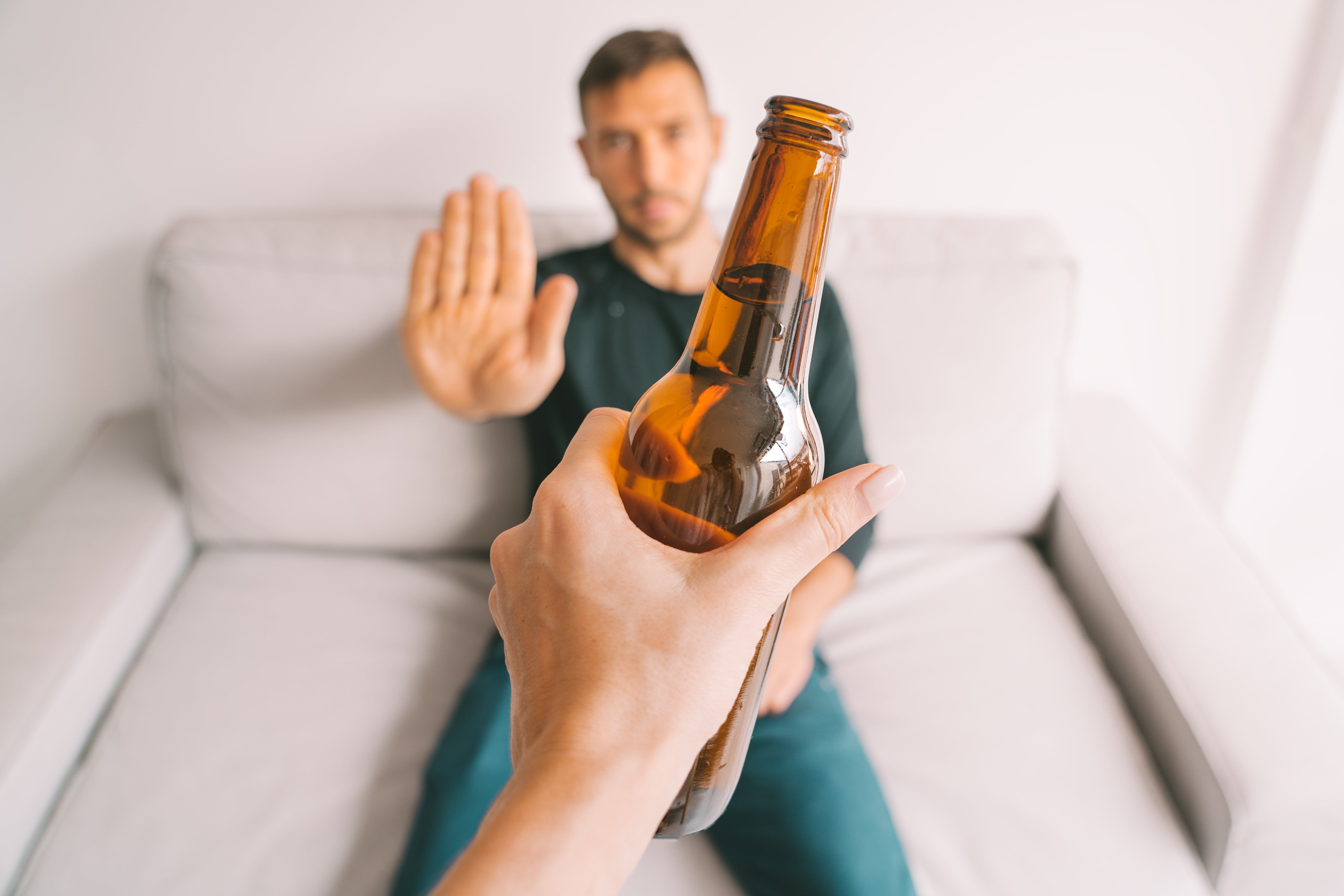
For generations, unwinding meant pouring a drink. A beer after work. Wine with dinner. A cocktail with friends.
But that ritual is starting to change.
More adults, particularly younger adults, are using cannabis while frequent alcohol use is declining. Among Americans ages 19 to 30, daily or near-daily cannabis use was nearly three times as common as daily or near-daily alcohol use in 2023.
That doesn't mean everyone is trading a martini for a gummy. Alcohol is still used by more Americans overall.
But something interesting is happening around the edges of happy hour.
For some adults, the question is no longer simply, "Do I want a drink tonight?"
It's becoming, "Would I rather have THC?"
Key Takeaways
- Cannabis use is rising while some measures of alcohol use are falling, especially among younger adults.
- Some cannabis users specifically report using cannabis in place of alcohol, although population trends alone cannot prove that everyone is making a direct substitution.
- Alcohol has well-established health risks, including effects on the liver, heart, brain, sleep, and cancer risk.
- THC is not risk-free. It can impair judgment and coordination, produce anxiety or paranoia in some people, and become problematic with frequent use.
- Edibles offer a very different experience from drinking because the dose can be measured and the effects develop gradually, but they can also take up to two hours to fully kick in.
- If you choose THC, don't mix it with alcohol, don't drive while impaired, and give edibles plenty of time before considering another serving.
Disclaimer: This article is for general informational purposes only and does not constitute medical or legal advice. THC laws vary by jurisdiction and are changing rapidly.
Are People Really Choosing THC Over Alcohol?
There is a measurable shift toward cannabis, but the story is more nuanced than "THC replaced alcohol."
A 2025 study using national Monitoring the Future data found a striking crossover among younger adults.
In 2023, 10.4% of adults ages 19 to 30 reported daily or near-daily cannabis use, compared with just 3.6% reporting daily or near-daily alcohol use.
Among adults ages 35 to 50, the gap had nearly disappeared. Daily or near-daily cannabis use was 7.5%, compared with 7.8% for alcohol.
Among adults ages 55 to 65, alcohol remained considerably more common.
And the trend has continued. The latest Monitoring the Future adult data released in August 2026 reported cannabis use at or near record highs while several measures of alcohol use remained at relatively low levels.
So yes, something is changing.
But overall alcohol use is still much more common than cannabis use. What has changed dramatically is the frequency with which some younger adults are choosing cannabis.
There is also evidence that at least some consumers consciously substitute cannabis for alcohol. Research has found substantial numbers of cannabis users reporting that cannabis led them to drink less.
That brings us to the more interesting question.
Why?
Why Are More People Rethinking Alcohol?
The appeal of drinking is increasingly being weighed against what comes afterward.
The buzz lasts a few hours. The consequences can last well into the next day.
For someone who has spent enough Saturday mornings bargaining with a bottle of ibuprofen and a glass of water, that trade can start looking less attractive.
Alcohol Hangovers Have a Cost
Alcohol can leave you dealing with headache, fatigue, nausea, thirst, poor concentration, and disrupted sleep long after the night is over.
For plenty of people, the issue isn't dramatic alcohol abuse. It's simply that a few drinks don't feel as worth it as they used to.
The older you get, losing half of Sunday to Friday night becomes a less compelling bargain.
THC doesn't create an alcohol hangover because there is no alcohol involved.
That does not mean THC guarantees a perfect morning. Higher doses and long-lasting edibles can produce residual tiredness or impairment in some people. Edible effects can also last longer than expected.
Still, for people who dislike the familiar alcohol hangover cycle, a different kind of evening can be appealing.
Does Alcohol Really Hurt Sleep?
Yes. Alcohol can make you feel sleepy while simultaneously disrupting normal sleep architecture.
A 2025 systematic review and meta-analysis found that alcohol reduced REM sleep even at relatively low doses, with disruption becoming more pronounced as alcohol intake increased.
That's the frustrating part.
The nightcap can make falling asleep feel easier while the actual quality and structure of sleep move in the wrong direction.
This is one reason some people begin looking for a different nighttime ritual.
But there's an important distinction.
Does THC Improve Sleep?
THC should not be presented as a universally better sleep solution.
Some people report using cannabis to relax or fall asleep, and certain cannabinoid formulations are specifically designed for nighttime use.
The research, however, is mixed.
A systematic review of recreational cannabis use found that many studies actually associated regular cannabis use with poorer sleep quality, particularly with heavier use.
So the accurate comparison isn't:
Alcohol ruins sleep. THC fixes it.
It's:
Alcohol is known to disrupt sleep, while the effects of THC on sleep vary considerably by dose, frequency, formulation, and individual.
For someone interested specifically in nighttime cannabinoids, CBDX's Lights Out Sugar-Free Sleep Gummies combine delta-9 THC with CBN and other nighttime ingredients in multiple THC strengths.
CBDX also offers Lights Out Zero, a THC-free option for people who want a cannabinoid-based nighttime routine without THC.
What Are the Health Tradeoffs Between THC and Alcohol?
Alcohol has extensive, well-established health risks. THC has its own risks, but they are not identical.
Alcohol affects far more than the liver.
The National Institute on Alcohol Abuse and Alcoholism reports that alcohol can affect the brain, gastrointestinal system, cardiovascular system, immune system, liver, pancreas, and other parts of the body.
Alcoholic beverages are also classified as a known human carcinogen. Alcohol consumption is associated with increased risk for cancers including breast, liver, colorectal, esophageal, and head and neck cancers.
Those are meaningful reasons to reconsider drinking.
But they do not automatically make THC "healthy."
THC Has Risks Too
THC is intoxicating and can affect memory, judgment, coordination, attention, decision-making, and reaction time.
Some people experience anxiety, disorientation, or paranoia rather than relaxation.
Frequent use can also become problematic. The CDC reports that the risk of cannabis use disorder increases with more frequent use and with younger age of first use.
The useful takeaway isn't that one substance is harmless.
It's that alcohol and THC have different risk profiles, and adults are increasingly evaluating those differences for themselves.
Why Do THC Gummies Appeal to People Cutting Back on Alcohol?
Gummies make THC easy to portion and fit naturally into the same kind of intentional evening ritual that alcohol once occupied.
There's no bottle to finish. No bartender pouring a little heavy. No gradual progression from one glass to three because everyone ordered another round.
A properly labeled gummy tells you how much THC is in the serving.
That predictability can be especially appealing to someone who isn't looking to get extremely intoxicated.
They just want a shift.
Low-Dose THC Changes the Equation
Not everyone using THC wants to get intensely high.
For some adults, a lower-dose gummy is the whole point.
CBDX's current THC lineup includes multiple potency options rather than forcing every consumer into the same dose. For example, Sky High Sugar-Free Hybrid Gummies are available in low, mid, and higher THC strengths.
That makes it easier to choose an experience intentionally rather than treating "THC" as one universal dose.
And with edibles, patience matters.
The CDC notes that edible THC can take 30 minutes to two hours to produce intoxicating effects. Taking more because "nothing is happening yet" is one of the easiest ways to accidentally overshoot the experience you wanted.
If you're new to edibles, our guide to how long THC edibles take to kick in goes deeper into onset and duration.
What Does Replacing a Drink With THC Actually Look Like?
It doesn't have to mean recreating cocktail hour with a different intoxicant every night.
For many people, the bigger shift is intentionality.
Instead of the Automatic Nightcap
Maybe it's Friday evening and your old routine was two glasses of wine while watching a movie.
The alternative might be a measured THC edible, a sparkling water, and enough time to actually see how the first serving affects you.
Different ritual. Different experience.
Instead of Drinking to Keep Up Socially
Alcohol has an unusual social momentum.
Someone orders a round, so you have another. Dinner becomes drinks. Drinks become another stop.
An edible doesn't naturally create that same refill cycle.
You take a defined amount and move on with your evening.
That simplicity is part of the appeal.
Instead of Mixing Everything Together
What doesn't make sense is replacing alcohol with THC and then using both together.
Using cannabis and alcohol at the same time can increase impairment.
If your goal is to drink less, actually drink less.
Don't simply stack THC on top of the cocktails.
Does THC Cause a Hangover?
THC does not produce the classic alcohol hangover, but it can still leave some people feeling tired or off the next day.
This is especially possible after larger edible doses or when THC is consumed late at night.
Edibles can have delayed and prolonged effects, and the duration depends on the dose, food intake, medications, alcohol use, and individual response.
That's another reason lower, deliberate dosing often makes more sense than treating gummies like candy.
Is THC Safer Than Alcohol?
There isn't a scientifically responsible one-word answer for every person.
Alcohol's long-term harms are extremely well documented, including liver disease, cardiovascular effects, addiction, injury, sleep disruption, and increased cancer risk.
THC does not share the exact same risk profile.
But cannabis can impair driving and cognition, increase anxiety in some users, affect cardiovascular function, and lead to cannabis use disorder in some people.
Your age, health, medications, frequency of use, dose, and reason for using either substance all matter.
So instead of asking, "Which one is healthy?" a better question might be:
Which risks am I willing to accept for the experience I'm looking for?
That's a much more useful conversation.
What About Hemp-Derived THC Gummies in 2026?
Hemp-derived THC law is changing significantly in 2026, so the old statement that hemp THC is simply "100% federally legal" is no longer adequate.
Under the current 2018 Farm Bill framework, qualifying hemp and hemp-derived cannabis products remain excluded from the federal Controlled Substances Act through November 11, 2026, assuming they comply with other applicable federal and state laws.
A substantially more restrictive federal hemp definition is scheduled to take effect on November 12, 2026.
Among other changes, the new definition excludes certain finished hemp-derived cannabinoid products containing more than 0.4 milligrams combined total THC and similar cannabinoids per container.
Congress continues to debate additional hemp legislation, so this remains a fast-moving area. State laws also vary.
Always check the current laws where you live before ordering or possessing hemp-derived THC products.
Can THC Gummies Make You Fail a Drug Test?
Yes. Hemp-derived THC can produce the same THC metabolites targeted by standard drug tests.
A drug test generally doesn't care whether the THC came from a hemp-derived gummy or another cannabis product.
If employment or another obligation requires drug testing, read our full guide: Will Hemp-Derived THC Gummies Make Me Fail a Drug Test?.
This is one situation where "legal" and "safe for my circumstances" can mean two completely different things.
If You Choose THC Instead of Alcohol, Keep It Simple
You don't need to turn switching from alcohol into a science experiment.
A few principles cover most of it:
- Know how much THC you're consuming.
- Start with the lowest labeled serving that fits your experience level.
- Give edibles enough time before consuming more. Effects can take up to two hours to appear.
- Don't combine THC with alcohol. Combining substances can increase impairment.
- Never drive while impaired. Cannabis can slow reaction time and affect coordination, judgment, and perception.
- Keep THC securely away from children and pets.
- Check your local laws and workplace policies.
- Pay attention to frequency. An occasional choice and a daily habit are not the same thing.
THC doesn't need to become another automatic nightly ritual just because you're drinking less.
Sometimes the better shift is simply consuming less overall.
Frequently Asked Questions
Are more people using THC instead of alcohol?
Cannabis use has increased substantially among U.S. adults while some measures of alcohol use have declined. Among adults ages 19 to 30, daily or near-daily cannabis use was 10.4% in 2023 compared with 3.6% for alcohol.
Research also suggests that some consumers intentionally substitute cannabis for alcohol, although the overall population trends do not prove that every increase in cannabis use represents someone quitting drinking.
Does THC give you a hangover?
THC does not create the traditional alcohol hangover, but some people can experience lingering fatigue, drowsiness, or other effects after consuming THC, particularly with higher-dose edibles.
Is THC better for sleep than alcohol?
Alcohol is well documented to disrupt sleep architecture and reduce REM sleep.
THC's relationship with sleep is more complicated. Some people report that cannabis helps them wind down, while research on regular recreational cannabis use has also found associations with poorer sleep quality.
Can you take THC and drink alcohol together?
You can physically consume both, but combining alcohol and cannabis can increase impairment and is not the approach we'd recommend.
How long do THC gummies take to work?
Edible cannabis can take approximately 30 minutes to two hours to produce intoxicating effects.
Because the onset is delayed, avoid quickly taking another serving because you don't feel the first one yet.
Is hemp-derived delta-9 THC legal?
The answer depends on the date, the specific product, federal law, and your state.
The existing federal hemp framework remains relevant through November 11, 2026. A significantly narrower federal definition is currently scheduled to take effect November 12, 2026.
The Bigger Shift Isn't Really About THC
Maybe the most interesting part of the THC-versus-alcohol conversation isn't which substance "wins."
It's that people are questioning the default.
For decades, drinking was simply what adults did when they celebrated, relaxed, dated, watched a game, went to dinner, or made it through a long week.
Now there are more choices.
Some people are drinking less. Some are choosing THC occasionally. Some are switching to non-intoxicating cannabinoids. Some are choosing nothing at all.
And that's probably the real shift.
Your evening doesn't have to revolve around alcohol simply because it always did.
If THC fits the experience you're looking for, CBDX offers lab-tested THC gummies in a range of cannabinoid combinations, strengths, and sugar-free options so you can choose deliberately rather than guess.
Whatever you choose, know what you're taking, understand the tradeoffs, and make the decision on your own terms.


