



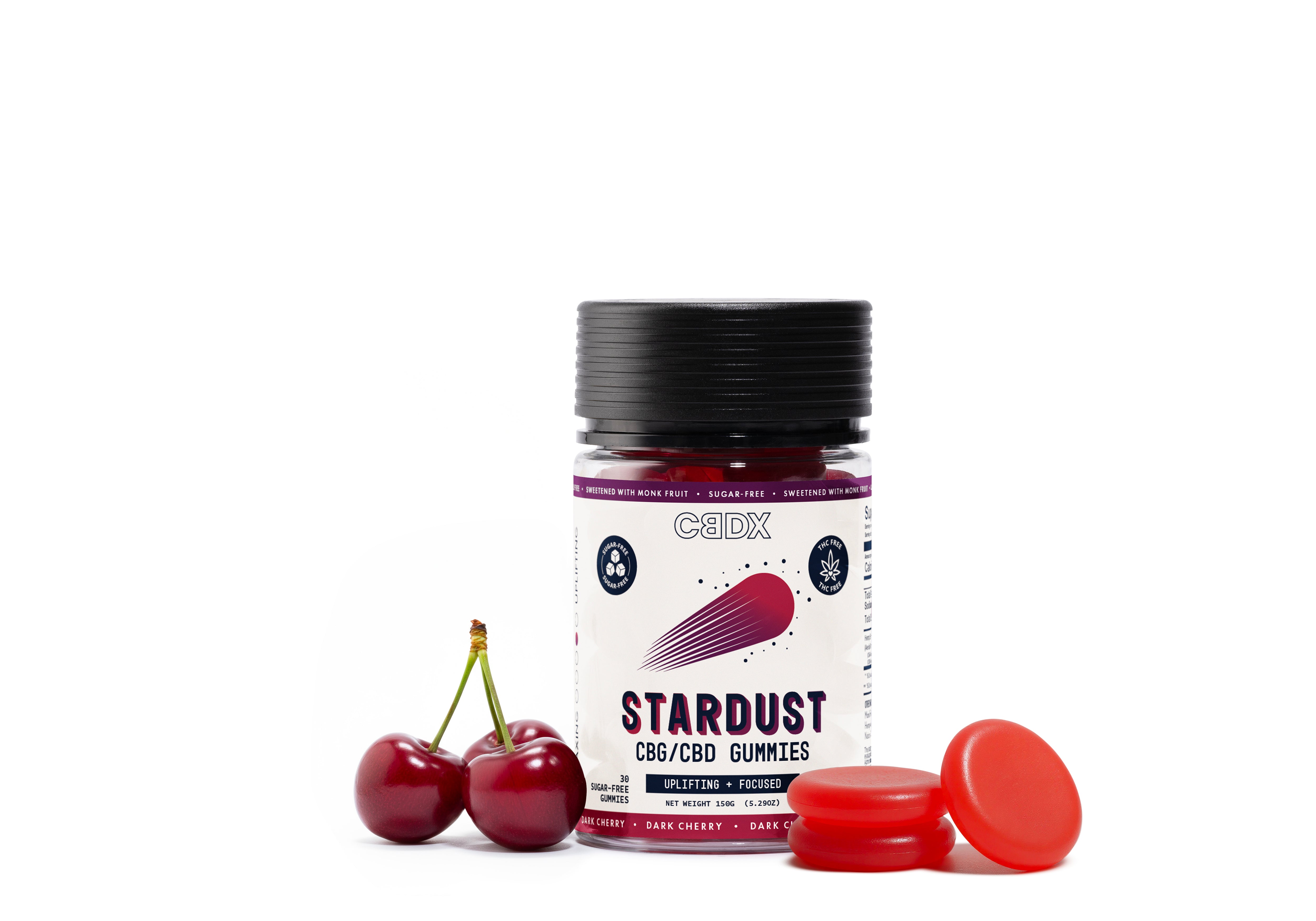
CBG used to be one of those cannabinoids almost nobody talked about. CBD got the attention. THC got the headlines. CBG quietly sat in the background.
That's starting to change.
CBG gummies are edibles containing cannabigerol (CBG), a naturally occurring, non-intoxicating cannabinoid found in hemp and cannabis. Early human research suggests CBG may have interesting effects on stress, anxiety, and memory without producing a THC-like high, although research is still in its early stages.
Here's what we actually know so far.
Key Takeaways
- CBG does not appear to produce the intoxicating effects associated with THC. A controlled human study found no evidence of subjective intoxication or impairment after a 20 mg dose.
- A small 2024 randomized trial found reductions in self-reported anxiety and stress after CBG compared with placebo.
- The same study unexpectedly found an improvement in verbal memory, making cognition one of the more interesting areas for future CBG research.
- Claims that CBG treats inflammation, pain, or sleep problems are ahead of the human evidence.
- CBG gummies offer a simple, pre-measured alternative to tinctures and other cannabinoid formats.
- Human research on CBG is still far smaller than the research available for CBD.
Disclaimer: This article is for general informational purposes only and is not intended to diagnose, treat, cure, or prevent any disease.
What Is CBG?
CBG, or cannabigerol, is a non-intoxicating cannabinoid naturally produced by the cannabis plant.
You've probably heard CBG called the "mother of all cannabinoids." That's catchy, but the science is slightly more precise.
The real starting point is CBGA, or cannabigerolic acid. CBGA serves as a biosynthetic precursor from which the plant produces compounds that ultimately become cannabinoids such as THC and CBD. CBG itself forms when CBGA is decarboxylated.
That relationship is where CBG earned its nickname.
Unlike delta-9 THC, CBG does not appear to produce a traditional cannabis high.
That makes it especially interesting for people exploring cannabinoids while wanting to remain clear-headed.
What Are CBG Gummies?
CBG gummies are pre-measured edibles that deliver CBG through the digestive system.
Their main advantage isn't mysterious. They're simply convenient.
There is no dropper to measure and no earthy tincture taste. Each gummy provides a defined amount of CBG, making it easier to know how much you're taking.
Oral absorption can vary considerably between people, and research suggests food composition can affect how much CBG enters the bloodstream.
So while gummies offer consistent dosing, your individual response can still vary.
What Are the Potential Benefits of CBG Gummies?
The most interesting early human evidence for CBG involves stress, anxiety, and cognition, but the research is still very limited.
That distinction matters.
A lot of CBG marketing currently jumps from promising laboratory research straight to confident claims about inflammation, pain, sleep, productivity, and neuroprotection.
Human evidence isn't there yet.
What we do have is worth paying attention to.
Can CBG Help With Stress or Anxiety?
One small controlled human trial found that CBG reduced self-reported anxiety and stress compared with placebo.
The 2024 double-blind crossover study included 34 healthy adults who received either 20 mg of hemp-derived CBG or placebo.
Researchers found significant overall reductions in anxiety. Stress was also reduced at one measurement point.
That's promising.
But it was one small study involving healthy adults and an acute dose. It doesn't establish CBG as a treatment for anxiety disorders or chronic stress.
Does CBG Help With Focus or Mental Clarity?
There isn't strong clinical evidence yet showing that CBG improves focus, but one early human finding makes cognition worth watching.
In that same 2024 study, participants performed better on a verbal memory measure after taking CBG than after placebo.
Researchers also found no evidence that CBG caused cognitive or motor impairment.
That's considerably more useful than simply claiming CBG is a "productivity hack."
It suggests CBG may be interesting for people looking for a cannabinoid experience without the cognitive impairment associated with THC, while giving researchers a reason to investigate memory and cognition further.
Is CBG Anti-Inflammatory?
CBG has shown anti-inflammatory activity in laboratory and animal research, but strong human evidence is still lacking.
This is an area where cannabinoid marketing tends to get ahead of the science.
Preclinical research involving CBG is genuinely interesting, including studies involving inflammatory pathways and multiple molecular targets. But that doesn't yet prove that a CBG gummy will reduce joint pain, muscle soreness, or inflammation in people.
Those questions need proper human trials.
Does CBG Help You Sleep?
Current research does not support positioning CBG as a proven sleep aid.
A randomized placebo-controlled study published in 2025 examined CBG in veterans experiencing sleep difficulties. Researchers saw improvement in sleep measures, but the difference between CBG and placebo was not statistically significant.
CBG may still fit naturally into some people's evening routines, particularly if they personally find it relaxing.
But "CBG improves sleep" would be stronger than the evidence currently supports.
Will CBG Gummies Get You High?
CBG itself is considered non-intoxicating and does not produce the characteristic high associated with THC.
The 2024 controlled human study found no evidence of subjective drug effects or impairment after participants consumed 20 mg of CBG.
That's one of CBG's biggest points of distinction.
You can explore a cannabis-derived cannabinoid without necessarily looking for intoxication.
As always, check the cannabinoid profile of the actual product you're using. A product containing CBG could theoretically contain THC or other cannabinoids as part of its formulation.
The label and third-party lab report matter.
CBG vs. CBD: What's the Difference?
CBG and CBD are both non-intoxicating cannabinoids, but CBD has been studied far more extensively in humans.
There isn't enough evidence to responsibly say that CBG is "better for focus" while CBD is "better for relaxation."
The reality is more interesting than that.
CBG and CBD interact differently with cannabinoid receptors and other signaling systems in the body. Research into CBG remains relatively young, while CBD has decades of additional scientific and clinical research behind it.
So rather than viewing CBG as a replacement for CBD, it makes more sense to think of it as another cannabinoid with its own emerging profile.
And sometimes the two appear in the same formula.
Meet Stardust: CBDX's CBG + CBD Gummy
CBDX created Stardust CBG Gummies for people looking for a simple daytime cannabinoid formula centered around CBG.
Each current Stardust gummy contains:
- 15 mg CBG
- 5 mg CBD
- Vegan ingredients
- Organic cane sugar
- Strawberry Cream flavor
- Third-party lab testing
Stardust comes in a 50-count jar and combines CBG with a smaller amount of CBD rather than loading the formula with a long list of unrelated ingredients.
It's deliberately simple.
One gummy. Two cannabinoids. No complicated routine.
When Should You Take CBG Gummies?
There is no scientifically established "best" time to take CBG.
That depends more on why you're taking it and how CBG personally affects you.
Some people prefer cannabinoids like CBG earlier in the day because they don't find them sedating. Others may prefer taking one later when they're winding down.
If you're trying CBG for the first time, the more useful approach is to choose a time when you can pay attention to how you actually respond rather than chasing a theoretical perfect schedule.
Consistency also makes it easier to judge whether a supplement is doing anything useful for you.
How Long Do CBG Gummies Take to Work?
There isn't enough CBG-gummy-specific research to promise an exact onset time.
Gummies need to move through digestion before their cannabinoids are absorbed, and cannabinoid absorption differs substantially among individuals.
Research on oral CBG also suggests that food, particularly dietary fat, can influence CBG exposure.
Don't assume that taking more immediately because you don't notice something yet will necessarily produce a better result.
Give an oral product time to do what it's going to do.
Can You Take CBG Every Day?
We don't yet have enough long-term human research to make broad claims about daily CBG use.
Acute human research is encouraging from a tolerability standpoint, but researchers are still calling for longer-term studies. A 2026 human study examining single oral CBG doses also emphasized the need for chronic-dosing research.
If you're taking medications, have a medical condition, are pregnant or breastfeeding, or have another reason to be cautious with supplements, talk with an appropriate healthcare professional before adding CBG to your routine.
What Should You Look for in CBG Gummies?
A good CBG gummy shouldn't require much detective work.
Look for:
- Clearly stated CBG per serving
- A current third-party Certificate of Analysis
- Transparent THC content
- A complete ingredient list
- A manufacturer that identifies what is actually in the product
The flashy claims matter considerably less than knowing what's inside the gummy.
Frequently Asked Questions About CBG Gummies
What does CBG stand for?
CBG stands for cannabigerol, a naturally occurring cannabinoid found in cannabis and hemp.
Does CBG get you high?
CBG is considered non-intoxicating. In a small controlled human trial, 20 mg of CBG produced no evidence of subjective intoxication or impairment.
Is CBG the same as CBD?
No. CBG and CBD are different cannabinoids with different pharmacological profiles. Both are generally considered non-intoxicating, but CBD currently has a much larger body of human research.
Is CBG good for focus?
There isn't enough evidence to say that CBG is a proven focus supplement. However, one small randomized trial found improved verbal memory after CBG without cognitive impairment, making cognition an interesting area for additional research.
Is CBG good for sleep?
CBG has not been established as a sleep aid. A recent randomized study did not find a statistically significant improvement in sleep compared with placebo.
Are CBG gummies legal?
Hemp-derived cannabinoid laws depend on the product, how it was produced, and state and federal law.
Federal hemp rules are also scheduled to change on November 12, 2026. The new federal definition places additional restrictions on how hemp-derived cannabinoids are produced and on the THC content of finished products.
Blanket statements that all CBG products are "100% federally legal" should therefore be avoided.
CBG Is Promising. That's Enough.
CBG doesn't need miracle claims to be interesting.
It's a non-intoxicating cannabinoid with a growing body of research and some genuinely intriguing early human results around stress, anxiety, and memory.
There is still plenty we don't know.
And that's okay.
If you're curious about CBG, Stardust CBG Gummies offer a simple way to explore it with 15 mg of CBG and 5 mg of CBD in each gummy.
Start with what the science actually says. Then see how CBG fits into your own routine.


