



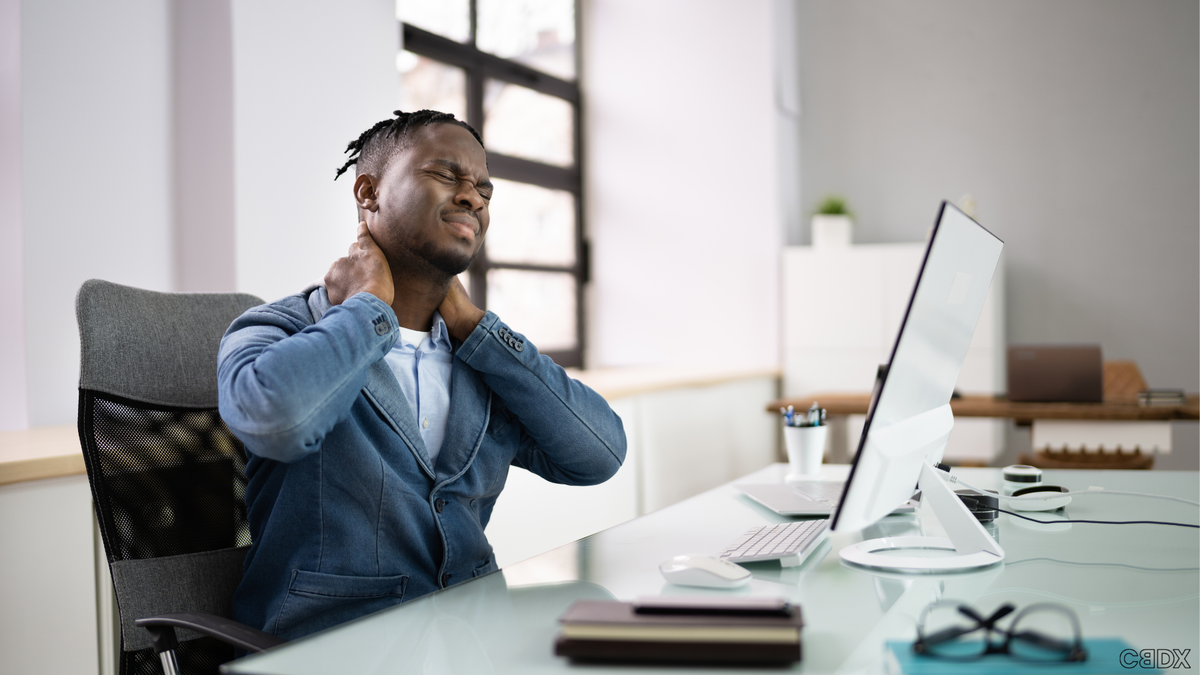
Pain has a way of shrinking life quietly.
Not all at once.
Not dramatically.
It happens one small decision at a time.
You skip the hike.
Reconsider the long drive.
Modify the workout.
Turn down dinner because sitting in that chair for three hours sounds miserable.
Wake up tired because your hip, shoulder, back, or neck never quite let you settle.
Eventually, you barely notice how much planning happens around what hurts.
And for many people, the hardest part is not even the pain.
It is what needing relief seems to say about them.
They do not want to become fragile.
They do not want to feel medicated.
They do not want to lose their edge, independence, clarity, or sense of control.
So they adapt.
They stretch.
Ice.
Train around it.
Change chairs.
Change pillows.
Take something occasionally.
Then stop because they do not like how it makes them feel.
They tell everyone they are fine.
This is the quieter side of the cannabis conversation.
Not cannabis as rebellion.
Not getting high for the sake of getting high.
Cannabis as one of several tools being quietly explored by people who simply want more of their life back.
Pain Is Common. Talking About It Is Not.
There is pain that stops everything.
Then there is the kind millions of people quietly carry around.
The back that always hurts a little.
The knee that decides whether stairs are happening today.
The shoulder that never completely recovered.
The nerve pain that appears at night.
The stiffness that takes the first twenty minutes of the morning to negotiate with.
You still work.
Still exercise.
Still show up.
From the outside, nothing looks particularly wrong.
That is part of the problem.
Functional people become extremely good at hiding discomfort.
Eventually, pain becomes background noise.
Something you manage rather than something you solve.
Pride Changes the Way People Seek Relief
Pride gets treated like a bad word sometimes.
It isn't.
Pride can mean:
I take care of myself.
I can handle things.
People depend on me.
I don't want to lose what my body can still do.
That is healthy until it becomes:
I would rather quietly suffer than admit I need help.
Pain meets that pride differently depending on the person.
For the Athlete, Pain Can Feel Like Part of the Contract
Athletes learn early that discomfort and progress sometimes live close together.
Soreness becomes normal.
Playing through something becomes admirable.
Recovery is something you squeeze between training sessions.
The mindset that creates high performance can also make it difficult to recognize when pushing through has stopped being productive.
But most active people are not looking for something that makes them care less about training.
They want the opposite.
They want to keep doing it.
That changes what relief needs to look like.
Something that leaves you heavily intoxicated, uncoordinated, or mentally dull may defeat the purpose.
The goal is not escaping the body.
It is getting along with it well enough to keep moving.
For the Working Adult, Pain Has to Fit Around Everything Else
There is no special afternoon off because your back hurts.
There are meetings.
Kids.
Flights.
Groceries.
Dinner.
A mortgage.
Someone who needs a ride somewhere.
You might have significant discomfort and still have twelve things to accomplish before 6 p.m.
That makes function incredibly valuable.
For many adults, the question is not:
What gives me the strongest relief?
It is:
What can I use without giving up the rest of my day?
That distinction explains a lot about the growing interest in lower-dose and non-intoxicating cannabinoid products.
For Older Adults, Independence May Matter More Than Pain
Getting older changes the calculation again.
Aching joints may be frustrating.
Losing independence can be frightening.
Many older adults grew up during an era when cannabis had a very different cultural identity.
The phrase:
Take a cannabis gummy
may still translate internally to:
Get stoned.
And that is often exactly what they do not want.
They want to:
-
Think clearly
-
Walk confidently
-
Drive when appropriate
-
Remember conversations
-
Handle their own affairs
-
Remain themselves
So the objection is often not cannabis itself.
It is the fear of losing control.
That is why today's cannabinoid market looks so different from the one many older adults remember.
The Relief Trade-Off Is Real
Conventional pain medications have important roles.
They also have trade-offs.
Opioids can provide powerful pain relief but carry significant risks, including dependence and overdose.
NSAIDs such as ibuprofen and naproxen are useful for many people, but regular or prolonged use can create gastrointestinal, kidney, and cardiovascular concerns in certain individuals.
Other medications can cause:
-
Sedation
-
Dizziness
-
Mental fog
-
Constipation
-
Other side effects
None of this means conventional pain medication is bad.
Sometimes it is exactly the right tool.
The point is that people living with persistent pain are constantly making compromises.
How much relief do I want?
What side effects am I willing to accept?
How functional do I need to remain?
Cannabinoids have entered that calculation too.
What Does the Research Actually Say About Cannabis and Chronic Pain?
This is where we should resist both extremes.
Cannabis is not a miracle pain treatment.
It is also no longer reasonable to dismiss the entire subject as anecdotal.
A major updated review published in 2025 examined 25 randomized controlled trials involving more than 2,300 people, most of whom had neuropathic pain.
The overall finding was modest.
Certain THC-containing products produced small reductions in pain, particularly THC-dominant products and products containing comparable amounts of THC and CBD.
But there were trade-offs.
THC-containing products also increased side effects such as:
-
Dizziness
-
Sedation
-
Nausea
CBD-dominant products generally showed less convincing pain benefit.
Read the updated chronic pain review
That may not sound revolutionary.
It is actually very useful information.
Because it tells us something important:
Cannabinoids can help some people with certain types of pain, but there is no universal cannabinoid, dose, or formula that reliably fixes chronic pain without trade-offs.
Welcome to pain management.
Almost nothing is that simple.
The Middle Ground Is Where Things Get Interesting
Pain treatment is often presented as two choices.
Take something strong.
Or tough it out.
But most people do not live at either extreme.
They live in the middle.
Maybe you do not need your pain to disappear.
Maybe going from:
7 out of 10
to:
4 out of 10
changes your entire evening.
Maybe the goal is not eliminating every sensation.
Maybe it is sleeping.
Taking a walk.
Sitting through dinner.
Finishing the workout.
Playing with your kids.
Getting through a flight.
Pain does not have to reach zero before life becomes noticeably easier.
That is one reason subtle relief can matter more than dramatic relief.
Cannabis Has Changed Since Many People Formed Their Opinion of It
For a long time, cannabis came with an obvious problem:
You often had no idea how much THC you were getting.
One brownie.
One joint.
One edible someone made in their kitchen.
Maybe mild.
Maybe enormous.
That unpredictability made cannabis difficult to treat as an intentional tool.
Today's gummies can be very different.
A clearly labeled product can tell you:
2.5 mg THC.
5 mg THC.
10 mg THC.
Or:
No THC at all.
It may also include defined amounts of CBD, CBG, CBN, or CBC.
That changes the conversation.
Instead of:
Do I want to get high?
the question becomes:
Which cannabinoids do I want, and how much?
That is a much more useful question.
Relief Without Intoxication Is Possible, but There Is an Important Catch
CBD, CBG, CBN, and CBC do not produce the traditional THC high.
That makes them attractive to people who want to explore cannabinoids while remaining clear-headed.
CBDX currently offers an entire THC-Free Gummy Collection, including CBD, CBG, CBN, CBC, and combination formulas.
That creates options for people who simply do not want THC.
But we should be careful about the next leap.
Non-intoxicating does not automatically mean clinically proven pain relief.
In fact, current chronic-pain research generally provides stronger evidence for certain THC-containing formulations than for CBD alone.
That does not mean someone cannot personally prefer CBD or another non-intoxicating cannabinoid.
It means the marketing should not outrun the evidence.
And Low-Dose THC Is Not the Same as No Intoxication
This distinction matters too.
A small amount of THC may feel subtle.
But THC is still psychoactive.
Even 2.5 or 5 mg can be clearly noticeable to someone who is sensitive or inexperienced.
So when someone says:
I want relief but I don't want to feel high.
there are really two different paths to explore.
THC-free cannabinoids
or:
a deliberately small amount of THC that the individual already understands and tolerates.
Those are not the same thing.
And neither should be marketed as guaranteed pain relief.
Why Gummies Appeal to People Who Value Control
There is something almost boring about a gummy.
That is part of its appeal.
No smoke.
No vapor.
No equipment.
No smell hanging around.
No guessing how big the last inhale was.
A properly labeled gummy gives you a measured amount.
That makes cannabinoids easier to approach intentionally.
The downside is timing.
Edibles take time to work.
And once you take one, you cannot untake it.
That makes starting low especially important.
For someone completely new to THC, our THC Gummies for Beginners guide explains the basics.
For dose differences, see the THC Gummy Dosage Guide.
Sometimes the Goal Is Not Pain Relief at All
This is worth thinking about.
Ask someone with chronic pain what they want.
They may not say:
I want less pain.
They might say:
I want to sleep through the night.
I want to walk the dog again.
I want to make it through dinner without constantly shifting in my chair.
I want to work out without spending the next two days regretting it.
I want to stop thinking about my back every five minutes.
The real goal is often function.
That changes how success should be measured.
Not:
Did I feel absolutely nothing?
But:
Did this help me do something pain was taking away from me?
That is a much more human metric.
Privacy Matters More Than the Cannabis Industry Realizes
Not everyone who uses cannabinoids wants cannabis to become part of their personality.
Some people love cannabis culture.
Great.
Others absolutely do not.
They are not looking for:
-
Weed merchandise
-
A new identity
-
A lifestyle
-
A conversation starter
They want something they can keep in a cabinet, take intentionally, and go on with their life.
That quiet consumer has become increasingly important.
They may be 35.
They may be an athlete, executive, teacher, parent, retiree, or someone rebuilding life after an injury.
Their relationship with cannabinoids may be entirely private.
And that is okay.
You do not have to become a "cannabis person" to be curious about cannabinoids.
Pride Does Not Have to Disappear for Relief to Begin
There is an old version of strength that says:
Ignore it.
Push through.
Say nothing.
Need nothing.
But there is another version.
Pay attention.
Experiment intelligently.
Know your limits.
Protect your ability to keep doing what matters.
That is not surrender.
It is maintenance.
We accept that concept everywhere else.
Athletes recover.
Cars get serviced.
Businesses adjust when something stops working.
Bodies apparently are supposed to be exempt.
They aren't.
What CBDX Is Trying to Build for This Person
CBDX was never meant to be about pushing people toward the strongest possible cannabinoid experience.
The more interesting opportunity is choice.
Clearly labeled doses.
Different cannabinoid combinations.
Low-dose THC options.
THC-free options.
Sugar-free formulas.
Products built around different moments rather than one generic gummy pretending to be everything.
Current THC-free options include products such as:
Zero Gravity, built around CBD.
Stardust, combining CBG and CBD.
Lunar Drift, combining CBN and CBD.
Lights Out Zero, combining CBN and CBD for nighttime use.
And Prism Full Spectrum CBD Gummies offer a broader full-spectrum cannabinoid profile with CBD as the dominant cannabinoid and a trace amount of THC.
None of those should be presented as pain medications.
They are simply different ways adults can explore cannabinoids based on the experience they actually want.
CBDX's current THC-free lineup reflects that broader approach.
If You Do Choose THC, Know What You Are Trading
THC may offer benefits for some types of pain.
It can also cause:
-
Intoxication
-
Dizziness
-
Sedation
-
Anxiety in some people
-
Impaired coordination
-
Impaired judgment
Those trade-offs matter more if you are:
-
Older
-
Prone to falls
-
Driving
-
Taking other sedating medications
-
Competing in drug-tested athletics
-
Doing work requiring quick reactions or precise judgment
That does not make THC inherently good or bad.
It makes dose and context important.
For anyone using prescription medications, our Cannabinoid and Medication Interactions guide is a good place to start.
The Quiet Shift
Something has changed in cannabis.
Not the loud part.
The quiet part.
The person taking a low-dose gummy after the workday.
The retired adult asking privately about CBD.
The athlete exploring cannabinoids while trying to stay functional.
The person with an old injury who has no interest whatsoever in cannabis culture but is tired of organizing every day around discomfort.
These people are not looking for permission to check out.
They are trying to stay engaged.
That is what makes this version of the cannabis conversation different.
Frequently Asked Questions
Can cannabis actually help chronic pain?
Certain THC-containing cannabinoid products have produced modest pain reductions in randomized trials, particularly in neuropathic pain.
Benefits vary and THC-containing treatments can also cause dizziness, sedation, nausea, and other side effects.
Does CBD relieve pain without getting you high?
CBD is non-intoxicating, but current randomized evidence for CBD alone in chronic pain is less convincing than many marketing claims suggest.
People may still choose CBD for other reasons or personal preference.
Can you use cannabinoids without THC?
Yes.
CBD, CBG, CBN, and CBC are non-intoxicating cannabinoids, and THC-free products are widely available.
Will a low-dose THC gummy make me high?
Possibly.
Sensitivity varies considerably.
A dose that feels subtle to one person can feel clearly intoxicating to another.
Why do some people prefer gummies?
Gummies provide clearly measured servings, require no inhalation, are discreet, and are easy to use consistently.
Their trade-off is delayed onset and longer-lasting effects.
Is cannabis safer than pain medication?
That is too broad a comparison.
Different pain medications and cannabinoid products have very different benefits and risks.
The right choice depends on the type of pain, medical history, other medications, goals, and individual response.
Final Thought: Relief That Respects the Person
Pain does not erase pride.
Needing help does not erase strength.
And accepting that your body needs something different than it did ten years ago does not mean you have lost.
For too long, pain relief has been framed as a choice between extremes.
Endure everything.
Or take something strong enough that you stop noticing.
There is a lot of room between those two places.
Sometimes the right goal is simply:
A little less pain.
A little more sleep.
One more walk.
One better workout.
One dinner where your back isn't the most interesting thing happening.
Cannabinoids will not be the answer for everyone.
For some people, they may not help at all.
For others, they may become one small piece of a much larger strategy involving movement, treatment, recovery, sleep, medication, physical therapy, nutrition, and time.
The important part is preserving the person inside all of it.
Their clarity.
Their independence.
Their dignity.
Their ability to keep doing the things that still make life feel like theirs.
The quieter world of cannabis relief is not really about escape.
It is about staying in the game.
On your own terms.
Explore CBDX THC-Free Gummies, browse Delta-9 THC Gummies, or read our evidence-focused guide to THC and chronic pain for a deeper look at the research.
This article is for general educational purposes only and is not intended to diagnose, treat, cure, or prevent chronic pain or any other medical condition. THC is intoxicating and may impair judgment, balance, and coordination. Do not drive or operate machinery while impaired.
Last reviewed and updated: September 2026


